



National Cervical
Screening Program
The National Cervical Screening Program aims to prevent cervical cancer through regular testing. Women and people with a cervix from 25 to 74 years of age are encouraged to have a Cervical Screening Test (CST) every five years to check for the Human Papillomavirus (HPV). The CST checks for HPV, a common sexually transmitted infection that can lead to cell changes in the cervix. Occasionally, the presence of abnormal cells can develop into cervical cancer. We accept two patient options for HPV testing:
- Clinician-Collected Samples (including for Liquid Based Cytology/LBC)
- Self-Collected Samples (or Dry Swabs)
-
What age is recommended for the first HPV screening?
-
What is the cervical screening clinical management pathway?
Patients aged 25 to 74 years are invited to have a HPV test every five years. This includes both vaccinated and unvaccinated screening participants, as the HPV vaccine protects against some but not all types of HPV.
- If HPV is not detected, LBC will not be performed and a recommendation to repeat screening in 5 years will be made. Cytology will be performed if the patient has symptoms of cervical disease or is undergoing management of a cervical abnormality.
- If HPV is detected, a reflex LBC/Thin Prep® will be performed on the same specimen.
There will be a combined report for HPV and LBC results, which includes a risk category and the recommended management, in line with the guidelines. There are three risk categories:
- Patients who are classified as Low risk are routinely invited to re-screen in five years.
- Patients who are classified as Intermediate risk are routinely invited to have another HPV test in 12 months. This is to check that the infection has cleared.
- Patients classified as Higher risk are routinely referred directly to colposcopy for further investigation.
Please refer to the Cervical Screening Pathway below for both clinician-collected and self-collected samples.
Cervical Screening Pathway Flyer
-
What is the difference between Liquid Based Cytology (LBC) and Dry Swab?
LBC is typically performed in a medical practice for clinician-collected samples when HPV is detected. A sample of cells is collected from the cervix into the liquid-based specimen vial known as ThinPrep®, which is sent to Clinical Labs for analysis to identify the presence of HPV viral DNA at the molecular level.
Dry Swabs are generally used for self-collection of cervical samples for HPV testing. It can be done at home or at a medical clinic. Note: Self-collected samples are not suitable for LBC testing - If HPV is detected on the self-collect dry swab, the patient will need to proceed with a clinician-collect test so that LBC can be performed.
Please refer to table below for Clinician-Collected versus Self-Collected samples for CSTs:

Clinician-collected cervical sample Self-collected vaginal sample Is co-testing possible? Yes No Indicated for:
• Those who are eligible and due or overdue for cervical screening, including during pregnancy
• Other points in the pathway where only a HPV test is required, including Test of Cure after HSIL treatment
• People who have had a total hysterectomy with history of HSILYes Yes • Those undergoing surveillance after completely excised AIS Yes No • People who have signs and symptoms suggestive of cervical cancer
• People who have postcoital or intermenstrual bleeding, post menopausal bleeding, or unexplained persistent vaginal discharge
• People who were exposed to DES in uteroYes No -
How do I order a CST at Clinical Labs?
Patient presents as Context Age Sample type Test type What to write on the pathology request form Asymptomatic National Cervical Screening Program routine five-yearly screening:
• Only 1 of this MBS item is claimable in a 57-month period≥ 24yrs & 9mths Cervical HPV test Cervical Screening Test (CST) Asymptomatic Screening in specific populations:
• Immune-deficient
• Early sexual debut, prior to 14 years and not vaccinated prior to sexual debut (only 1 claimable between 20 and 24 years of age)Any age Cervical HPV test • HPV test, Immune-deficient
• HPV test, Early debut HPVFollow-up test claimable after previous positive screening test (12-month repeat) Any age Cervical HPV test Follow-up HPV test FOLLOW-UP OR POST-TREATMENT FOR CLINICAL MANAGEMENT Following treatment of HSIL (also called “test of cure”) Any age Cervical HPV test Test of cure Vaginal Self-collect Self-collect test of cure Vault Self-collect Self-collect test of cure Following treatment of AIS Any age Cervical Co-test Co-test post AIS Vault Co-test Co-test post AIS DES exposed in utero Any age Cervical Co-test DES exposure Vault Co-test DES exposure Symptomatic For investigation of symptoms, e.g. abnormal bleeding Any age Cervical Co-test Co-test or HPV & LBC, Symptomatic (specify) Follow-up for HPV+ self-collect Only claimable within 21 months following the detection of oncogenic HPV (any type) on a self-collected screening test >24 years and 9 months Vaginal LBC HPV+ self-collect follow-up Cervical LBC HPV+ self-collect follow-up Repeat test following an unsatisfactory test Following an unsatisfactory test:
• Only claimable when preceded by another cervical or vaginal MBS itemAny age Cervical HPV test HPV test, previous result unsatisfactory Vaginal HPV test HPV test, previous result unsatisfactory Cervical LBC HPV test, previous result unsatisfactory -
What are the LBC/ThinPrep® collection instructions at Clinical Labs?
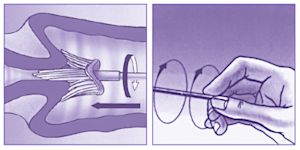
1. Collect:
To obtain an adequate sample, insert the central bristles of the brush into the endocervical canal. Apply sufficient pressure to gently bend the lateral bristles against the ectocervix and rotate completely three to five times in a clockwise direction. If a lubricant must be used, it should be applied sparingly on the outer portion of the speculum with great care to avoid the tip.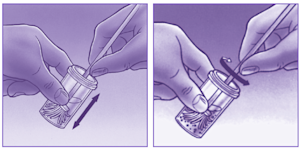
2. Rinse:
Rinse the brush in the PreservCyt® Solution vial by pushing it down against the bottom 10 times, forcing the bristles apart. Discard the collection device. Do not leave the head of the Cervex Brush in the vial. Replace the cap and tighten it so that the small black mark passes the corresponding line on the vial.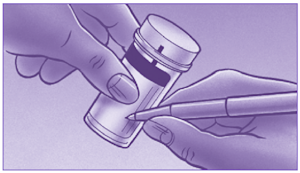
3. Record:
Record the patient’s name and date of birth on the vial, and their details and medical history on the pathology request form. Place both the vial and request form in the enclosed specimen collection bag for transport to Clinical Labs. -
What are the self-collect instructions at Clinical Labs?
Items required for self-collect:
- Clinical Labs request form signed by doctor (ensure self-collect HPV test is noted).
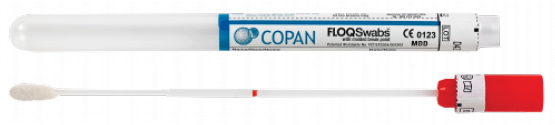
- Copan FLOQSwab® for vaginal self-collection (552C) (Red Top dry swab) – available from Clinical Labs.
- Only Copan FLOQSwab 552C is validated for use.
Steps for self-collecting:

1. Before you collect your sample, ensure you have clean hands. To avoid contamination, do not remove the swab from the container until you are ready to collect your sample and do not use any lubricant.
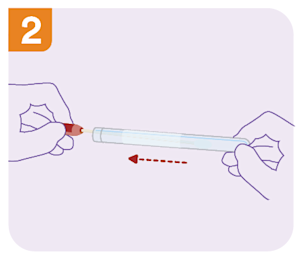
2. Once you are comfortable, remove the red cap and pull the swab out of the container.
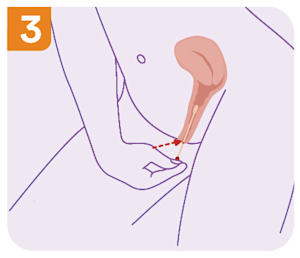
3. There is a red line halfway along the swab. Insert the front part of the swab inside your vagina aiming for this red line.
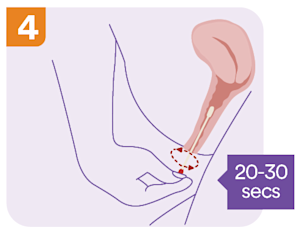
4. Once the swab is correctly inside your vagina, rotate it gently in a circular motion for 20-30 seconds.
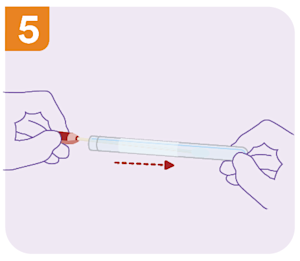
5. Remove the swab, place it back in the container and gently secure the cap.
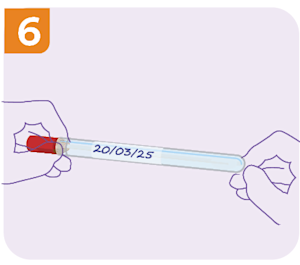
6. Return the self-collect swab to the medical practice or Clinical Labs collection centre with the request form with priority. Please ensure the Collection Date is labelled on the container.
-
Patient with cervical cancer symptoms
-
How to Order HPV Testing
Who to testWomen and people with a cervix from 25 to 74 years of age should have a Cervical Screening Test every five years
Symptomatic patients, e.g. abnormal bleeding, genital warts
Asymptomatic patients with previous positive screening test
Doctor recommendation based on patient context
When to TestRoutine five-yearly screening
Doctor recommendation based on patient symptoms, context and/or age (see section How do I order a CST at Clinical Labs above)
Request Form InstructionsUse the Australian Clinical Labs General Pathology Request Form
Complete by referring to section How do I order a CST at Clinical Labs above
Record any Clinical Notes and tick relevant boxes under Cervical Cytology
Specimen DetailsRefer to section How do I order a CST at Clinical Labs for sample and test type
The relevant sections above also outline the processes for sample collection
Test costRoutine five-yearly screening – Only 1 MBS item is claimable in a 57-month period for those aged over 24yrs & 9mths
Only 1 claimable between 20 and 24 years of age
Follow-up test claimable after previous positive screening test (12-month repeat)
Only claimable within 21 months following the detection of oncogenic HPV (any type) on a self-collected screening test for those aged over 24yrs & 9mths
See section How do I order a CST at Clinical Labs for more details
Additional tests to considerThe first Cervical Screening Test at 25 years of age is an ideal opportunity to screen for common STIs, as chlamydia and gonorrhoea testing can be performed on the same ThinPrep® vial used to collect the Cervical Screening sample. No extra specimen collection is required.
Local Pathologists
 Pathologist

 Pathologist
Related Pages
Cytology Evaluation Program
This CPD program is a peer group audit, where participants are provided with important women’s health information relating to the population they service, including Cervical Screening Tests performed.
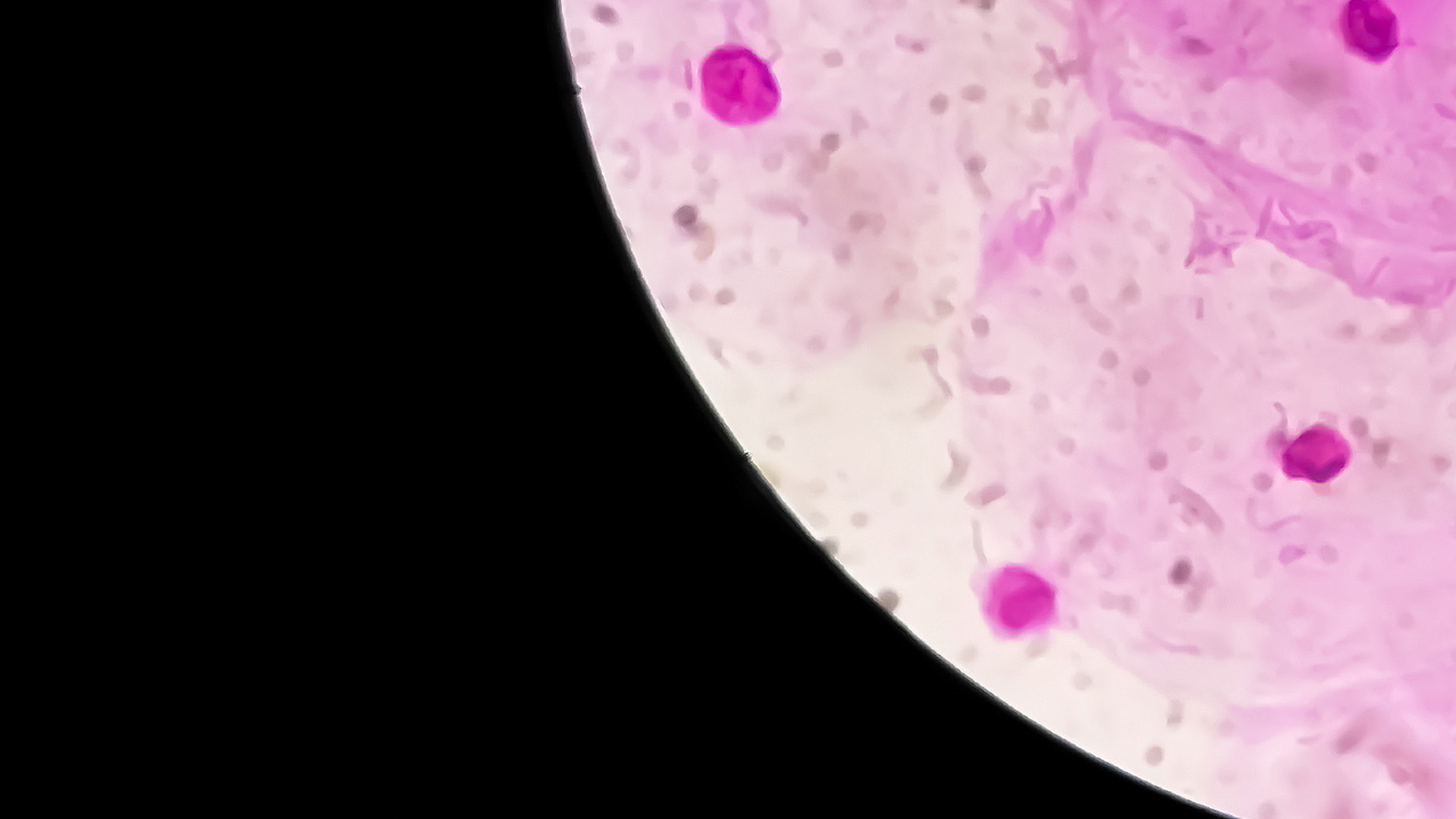
Reframing Bacterial Vaginosis
Dr Linda Dreyer explores insightful 2025 research that reframes Bacterial Vaginosis (BV) as a sexually associated condition, highlighting how partner treatment can significantly reduce recurrence rates.
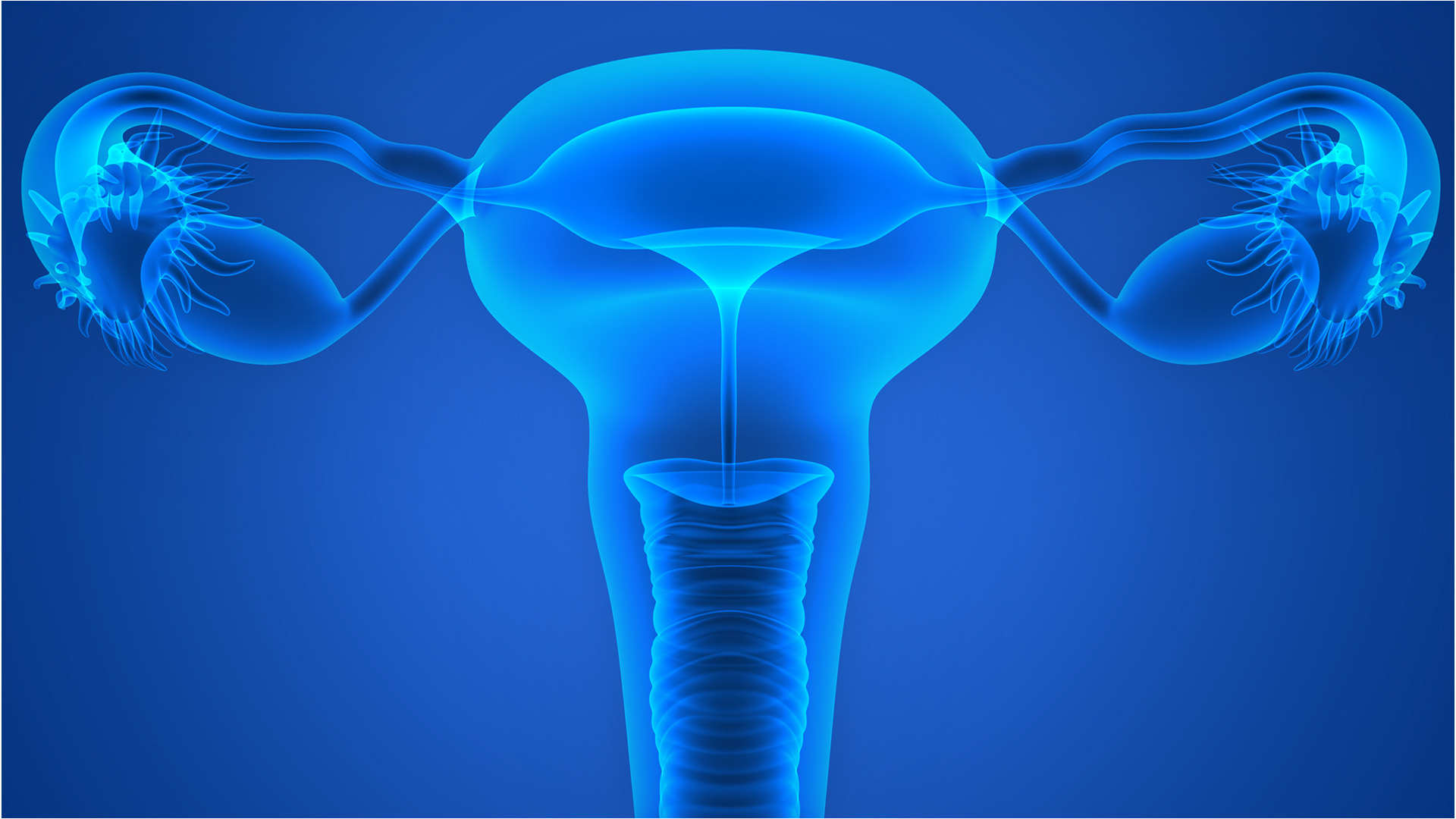
Female Reproductive Hormones and Fertility Testing
By Associate Professor Mirette Saad. This review article discusses female reproductive hormones and their role in fertility testing.